


The Product-Led Era Worked. But Now It’s Evolving.
Build something useful, make it accessible, let people experience the value firsthand.
Product-led growth has had a strong run in Tech B2B. But the landscape has shifted.
Markets are more crowded. Capabilities are competing on fractional differences. From the outside, many products feel surprisingly similar, even when they aren’t. Which leaves buyers sorting through features that all sound important, trying to figure out what actually matters.
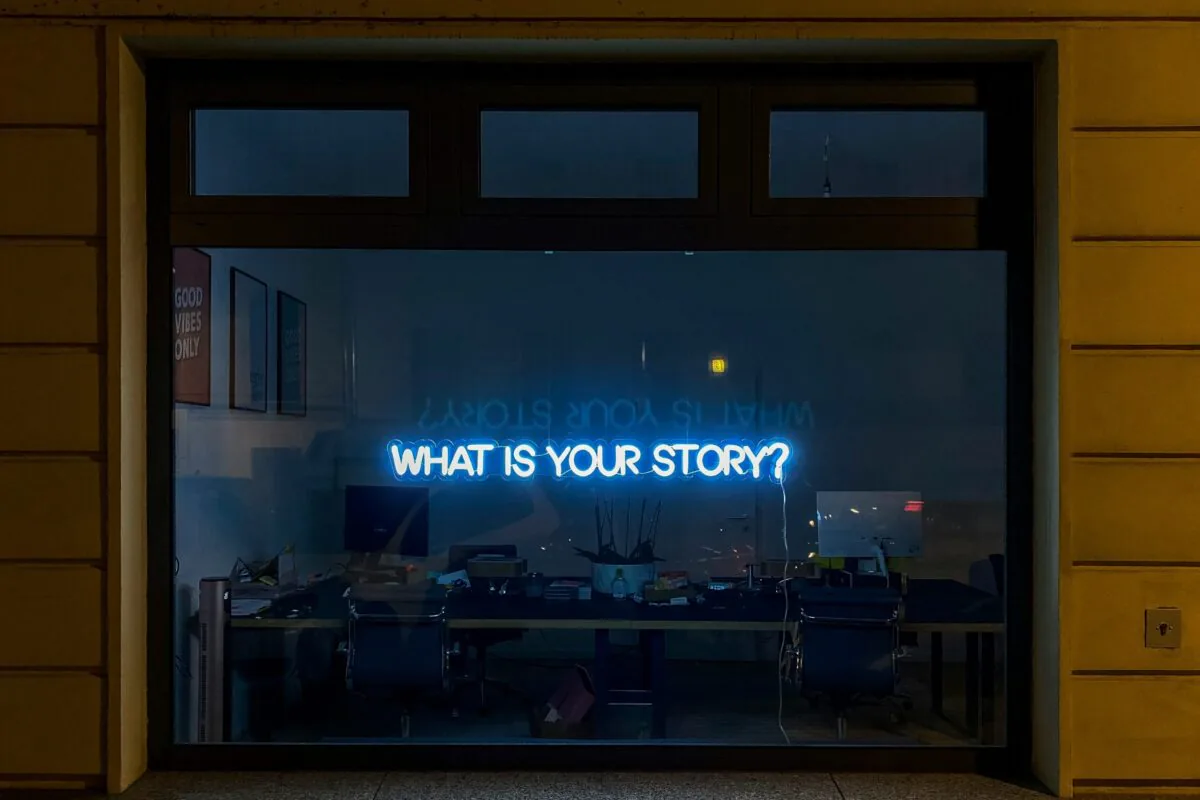
That’s where a new layer of growth is taking shape. Product-led growth gets you in the consideration set. Story-led growth helps you stand out within it.
Why Great Products Can Still Blend In
As products mature, feature sets tend to converge. Everyone is ‘faster’, ‘smarter’, ‘more integrated’, and ‘scalable’. Those claims are often true across the board.
The challenge is that buyers don’t experience your product in a vacuum. They experience it alongside five other options that sound just as capable. In that environment, technical advantages can be difficult to recognize quickly. What matters more is how clearly a buyer understands what your product changes for them.
Story Is Structure, Not Spin
“Story” in the context of marketing Tech B2B capabilities isn’t just about adding polish or personality. It’s about creating a clear, structured way to understand value. A strong story connects the dots between a problem, an approach, and an outcome. It gives buyers a way to quickly grasp why something might matter to them and where it fits in their world.
That kind of clarity becomes especially important when products are complex. Buyers are not just evaluating features. They are trying to understand the product’s impact on their lives, their position at work, and their team’s efficacy. A story is what makes that impact visible (and relatable).
Confidence Is the Real Conversion Point
Even in highly technical environments, decisions are rarely made on specifications alone. Buyers are weighing risk, thinking about internal alignment, and considering how easily they can explain and defend a choice to others.
The question isn’t just “Will this work?” It’s also “Will this make sense to everyone else involved?” Clear, well-structured storytelling helps answer both. It builds confidence early, which makes everything that follows move more smoothly.
What Does Storytelling in Tech B2B Actually Look Like?
A feature-led homepage might walk through capabilities in detail. A story-led one makes it clear, within a few seconds, who the product is for and what changes as a result.
A product demo can either explain functionality step by step or walk through a real scenario that shows impact in context.
Messaging can live in separate silos across teams, or it can align around a shared narrative that carries from marketing to sales to product.
None of these approaches replaces or obscures product quality. It makes that quality easier to recognize.
‘The Long Story Short’ is our monthly newsletter highlighting everything from our agency’s latest work to industry happenings at large. Don’t miss out, sign up in the form below!
Where Product and Story Work Together
Great products still matter. But the story is what helps people see the value of your products quickly and clearly. The Tech B2B companies gaining momentum today are not just building strong products. They are making those products easier to understand, easier to trust, and easier to choose.
That kind of alignment does not happen by accident. It comes from thoughtful positioning, clear messaging, and experiences designed to connect the dots. If your product is doing more than your story is currently showing, there is likely an opportunity worth exploring.
Interested in how we’ve helped Tech B2B companies in the past? Check out some relevant work here.